INTERNATIONAL UNIVERSITY: CONFIRMING POSITION – INTERNATIONAL INTEGRATION

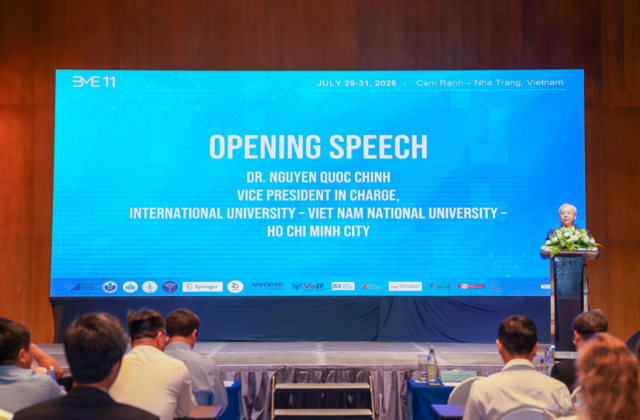
In the context of Vietnam’s higher education sector intensifying international integration and transitioning towards a research-oriented university model, International University (IU) – Vietnam National University Ho Chi Minh City (VNU-HCM) continues to affirm its pioneering position through outstanding achievements in training, scientific research, and industry connectivity.
From its early days, IU has chosen a distinct path by implementing an entirely English-taught training model. Today, 100% of the university’s teaching and research activities are conducted in English, creating an international academic environment and enabling students to develop international competencies right from the classroom.
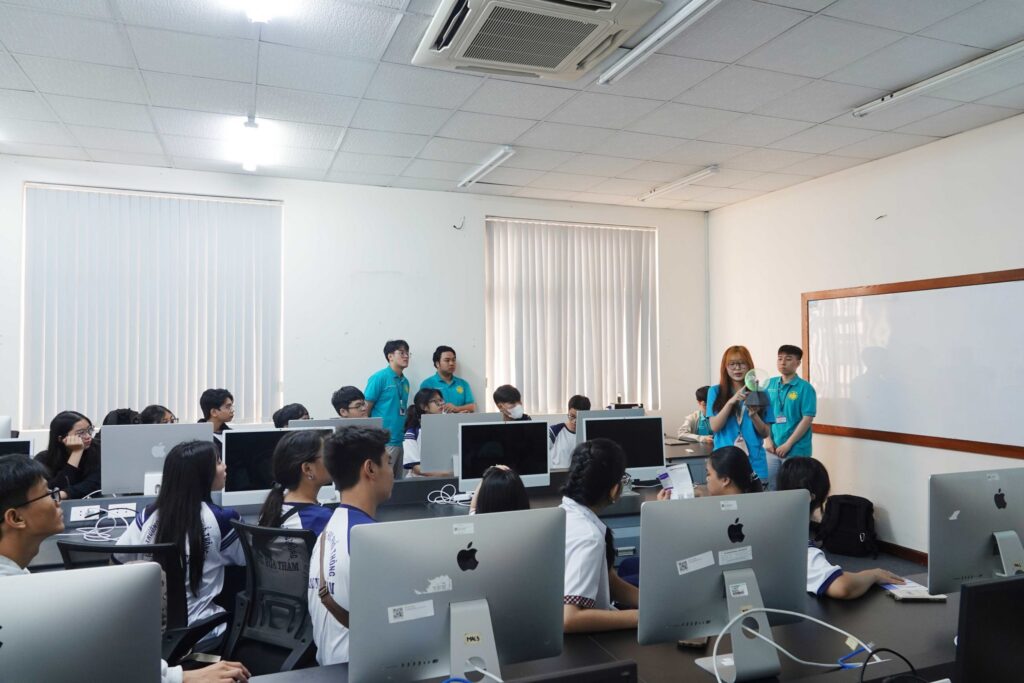
Students’ self-study at International University.
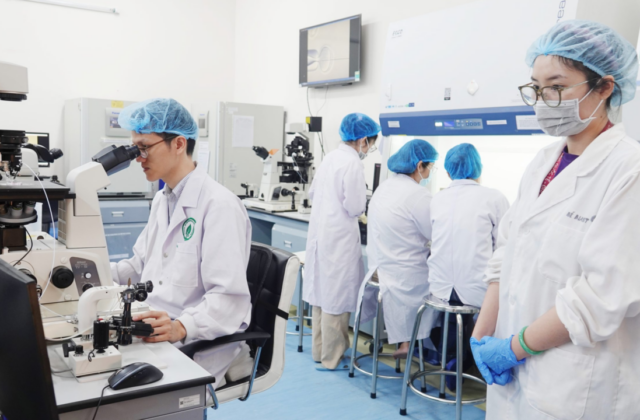
Beyond focusing on language skills, IU has continuously expanded its scale and improved the quality of training. Currently, IU offers 60 programs ranging from undergraduate to doctoral levels, including 24 undergraduate programs, 14 international joint programs, 15 master’s programs (1 international joint program), and 7 doctoral programs. Many of these programs are in high-demand fields such as artificial intelligence, data science, logistics, biotechnology, biomedical engineering, and business administration. Among them, the Biomedical Engineering program is a Talent Engineer program within the STEM field, developed with an international orientation to train high-quality human resources for the rapidly growing healthcare technology sector.
The quality of training at IU is affirmed through international accreditation systems. Currently, 92% of the university’s programs have met reputable international standards such as AUN-QA, ASIIN, FIBAA, ABET, and ACBSP. This is a testament to the university’s continuous efforts to ensure quality and align with advanced global educational standards.
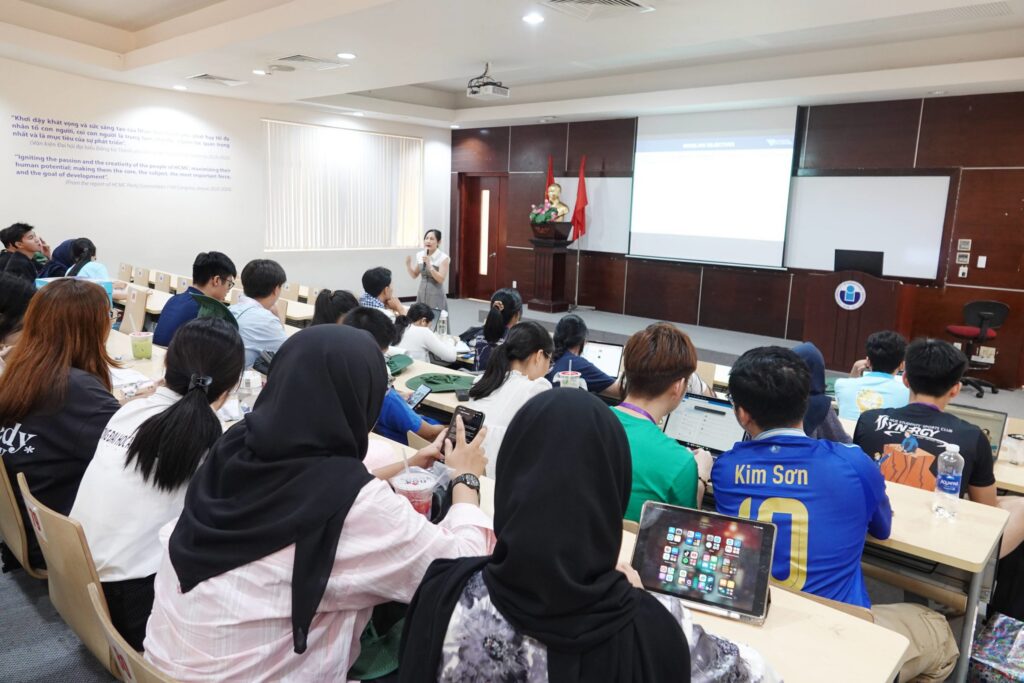
Exchange programs also help IU students improve their language skills and personal development.
The effectiveness of training is clearly reflected in the employment outcomes of graduates. According to IU’s survey, 95% of graduates have jobs within one year after graduation. Notably, over 49% of alumni are working at foreign-invested enterprises or international environments, demonstrating the high adaptability and competitiveness of IU students in the labor market.
Satisfaction from employers is also an important measure of training quality. Survey results show that 88% of employers positively evaluate IU graduates, particularly in terms of professional competence, language skills, teamwork ability, and international thinking.
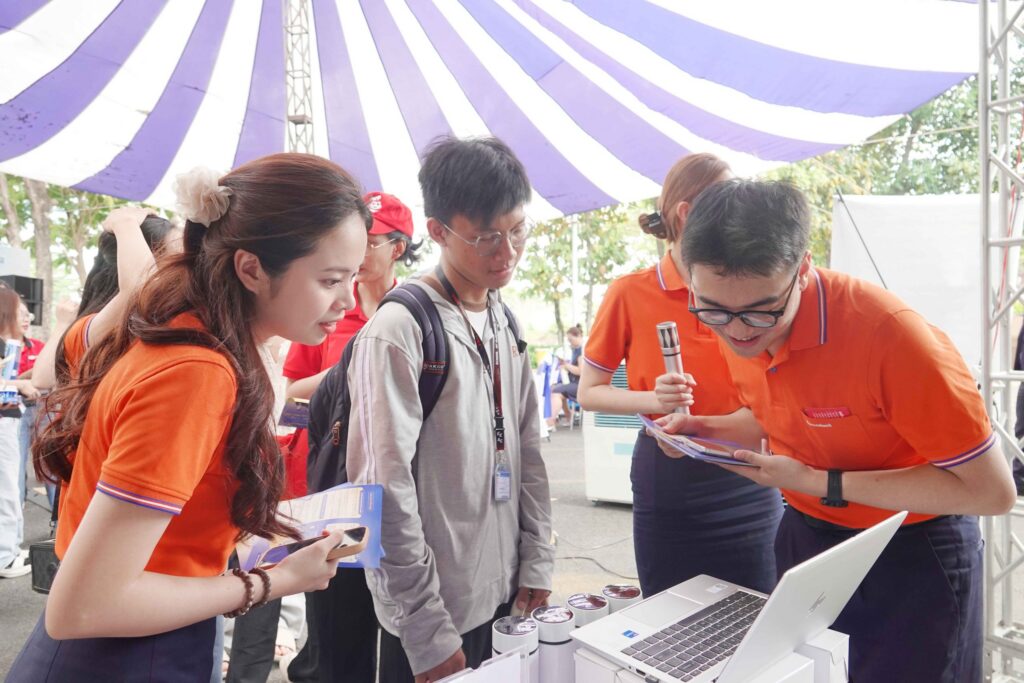
Employers come directly to IU to connect and recruit talented candidates.
Alongside training, scientific research is one of the outstanding strengths of IU. During the period 2020–2025, the university’s faculty and scientists have published 2,387 papers in international journals indexed by ISI/Scopus. These research outputs focus on key areas such as artificial intelligence, data science, biotechnology, logistics, and biomedical engineering.
The impressive figures regarding training, research, and graduate employment not only reflect the quality of education at IU but also demonstrate the effectiveness of the international integration university model that the university is pursuing. This also serves as the foundation for IU to continue developing into a reputable research university in the region, contributing high-quality human resources to the country’s development and integration process.