INTRODUCTION TO INTERNATIONAL UNIVERSITY – VNU-HCM
HISTORY OF FORMATION
Educational innovation is taking place on a global scale. Vietnamese education, especially higher education, needs to take a step forward in the process of innovation and international integration. Training high-quality human resources must meet the needs of the country's industrialization and modernization period, actively integrating into the international community. Ho Chi Minh City, along with Hanoi, has a special position in this process.
Therefore, in the university and college network planning for the period 2001 – 2010, issued together with Decision No. 47/2001/QĐ-TTg dated April 4, 2001 of the Prime Minister, it requires: “Universities and colleges in Hanoi and Ho Chi Minh City must lead the process of integration with the university and college education systems of countries in the region and internationally, diversify domestic and foreign investment forms, and link with reputable universities and colleges worldwide to enhance the quality of education.”
Regarding the needs of students nationwide, and especially in Ho Chi Minh City, for international quality education to obtain internationally recognized degrees, in English and other strong languages, which are increasing rapidly. The number of students studying abroad is growing significantly; international or hybrid education programs are developing; some foreign universities have or are preparing to establish training facilities in Vietnam. Recognizing this situation, in its medium-term strategy for building and developing from 2001–2005, the Ho Chi Minh City University of Science and Technology (VNU-HCM) clearly outlined: 'Establish the International University based on cooperation with reputable foreign universities, creating conditions for staff and students to study abroad locally, and through this, VNU-HCM can learn, compare experiences and quality, and its own training.'
After nearly two years of developing the project to establish the International University and submitting it to the Prime Minister, on December 5, 2003, the Prime Minister officially signed the decision to establish the International University.
International University is the first international university in Vietnam and a public multi-disciplinary, multi-field university, a member of VNU-HCM. The university has legal person status, its own seal and account, and is organized and operates according to the regulations of the Charter on the organization and operation of the university issued by the Director of VNU-HCM. Internationality is reflected in an academic environment at an international level in all aspects, including training programs, faculty, teaching languages, and infrastructure. Publicness is reflected in the state's support for infrastructure and financial investment, particularly from VNU-HCM, as well as other domestic and international organizations.
EDUCATION
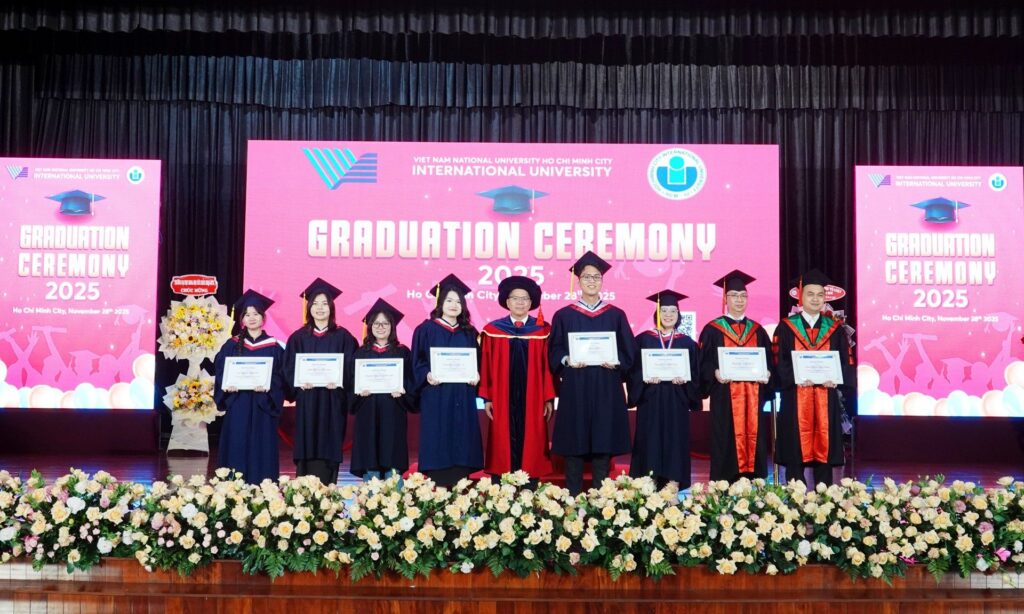
International Students Graduation Day
Currently, International University – VNU-HCM has 10 departments and 02 affiliated disciplines, offering 24 undergraduate majors/programs, 11 master's programs, and 05 doctoral programs. The university currently has over 10,000 undergraduate students and more than 600 postgraduate students and research candidates.
With a long history, tradition, and position within the Vietnamese higher education system, the university has trained many engineers, scientists, and senior managers... both domestically and internationally. Former students of the university are working in many countries and territories in various fields of work.
SCIENTIFIC RESEARCH
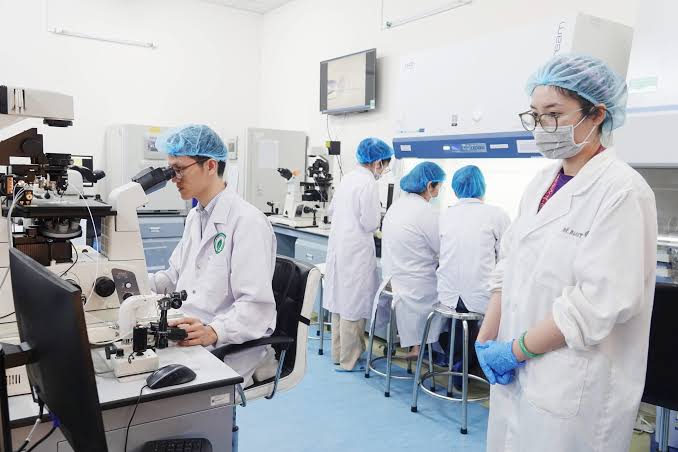
International University – VNU-HCM, a leading research university in Vietnam, with enhanced scientific research activities integrated with teaching, international cooperation, and technology transfer. Since 2003, the School has published over 2,100 scientific articles belongs to the system ISI và Scopus. Research activities are conducted in many fields such as information technology, biotechnology, biomedical engineering, electronics – telecommunications, materials science, environment, economics, and management. The university simultaneously strengthens research collaboration with universities, research institutes, and scientific organizations both domestically and internationally, creating opportunities for faculty, researchers, graduate students, doctoral candidates, and students to participate in scientific research activities. In addition, students are encouraged to carry out research projects and participate in student research conferences, contributing to the development of scientific thinking, innovation, and the ability to apply knowledge into practice.
COOPERATION
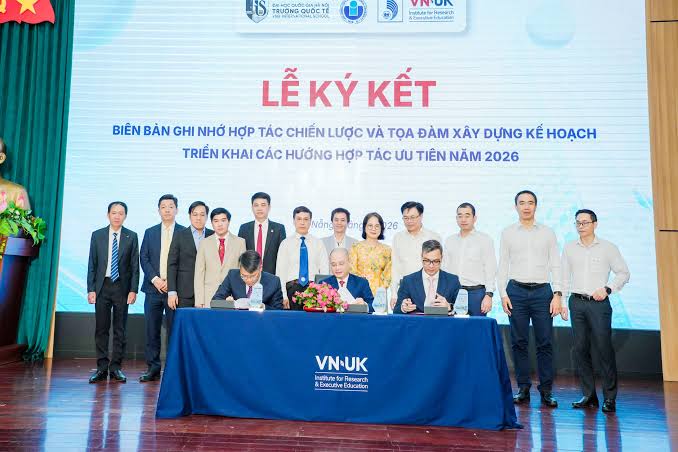
International University – VNU-HCM continuously expands and develops cooperation relations with universities, research institutes, educational organizations, and enterprises both domestically and internationally. The cooperation activities focus on Education, academic exchange, scientific research, technology transfer, and enterprise networking. The school also strengthens cooperation with enterprises in developing training programs, organizing internships, supporting scholarships, and creating job opportunities for students. In addition, these collaborative programs contribute to promoting Innovation and entrepreneurshipcreate an environment for connection between the institution, enterprises, and partners in the science – technology ecosystem.
QUALITY ASSURANCE
International University emphasizes activities related to quality assurance and educational accreditation according to domestic and international standards. The university has met the quality assurance standards of the Ministry of Education and Training in 2016, the AUN-QA institutional standard, and the ASIIN institutional standard, with a recognition period of 7 years (2023–2030). As of March 2025, the university has 14 programs meeting the AUN-QA standard, 12 programs meeting the ASIIN standard, 2 programs meeting the FIBAA standard, 2 programs meeting the ABET standard, and 1 program meeting the ACBSP standard.
PHYSICAL FACILITIES
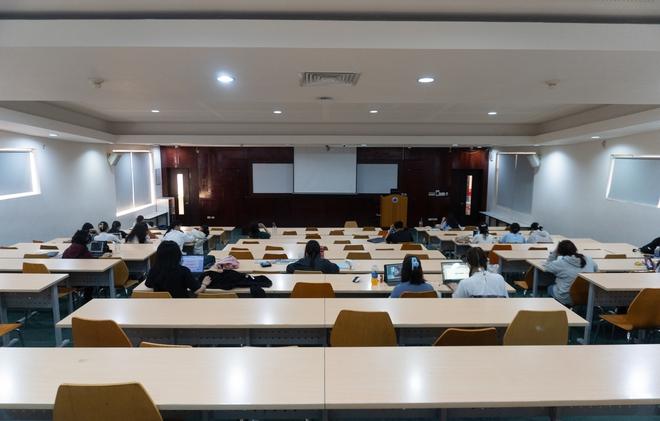
International University is located in the Ho Chi Minh City National University Urban Area, Khu Pho 33, Linh Xuan Ward, Ho Chi Minh City. The university has lecture halls, classrooms, laboratories, libraries, and spaces for training, scientific research, and student activities. Students also have access to shared facilities of VNU-HCM for study, sports, and social activities.
MISSION AND KEY OBJECTIVES
1. Enhance training quality to meet international standards
- Expand training programs according to international/area accreditation standards.
- Enhance teaching in English, apply modern and flexible pedagogical methods.
- Strengthen interdisciplinary training and international joint programs to meet the needs of the global labor market.
2. Strong development of scientific research activities and innovation.
- Promote basic research combined with applied research linked to enterprises and localities.
- Support and Encouragement for Faculty and Students to Participate in International Publications and Technology Transfer.
- Establish specialized research centers and startup incubators.
3. Promoting comprehensive internationalization in education, research, and academic environment
- Enhance strategic cooperation with top universities worldwide.
- Develop student-exchange programs, faculty-exchange programs, dual-degree partnership programs, and international internship programs.
- Build a multicultural learning environment to support international students coming to study at the university.
4. Completing the model of university autonomy, modernizing and transparent governance
- Continuing to innovate university management mechanisms towards autonomy – transparency – efficiency.
- Strong application of digital technology in management, operations and student care.
- Clear delegation of authority, enhancing accountability of units.
5. Development of high-quality human resources, international integration
- Attract and retain high-level, experienced international faculty and researchers.
- Investment in training and development of the team according to the orientation of specialization – multi-functional – creative.
- Create opportunities for staff and faculty to study and pursue further education abroad.
6. Strengthening Business Connectivity, Serving the Community, and Promoting Digital Transformation
- Expand the network of domestic and international corporate partners.
- Link education with practice, strengthen internship and real project periods for students.
- Application of digital transformation in teaching and learning, management and research to enhance the overall efficiency of the university.
7. Sustainable Development, towards a green – smart – environmentally friendly university
- Actively implementing projects and models using clean energy, recycling, and resource-saving.
- Enhance environmental awareness education for students and staff.
- Toward a Green University Model, Contributing to the Implementation of the National Sustainable Development Strategy